What is Board and Batten Siding?
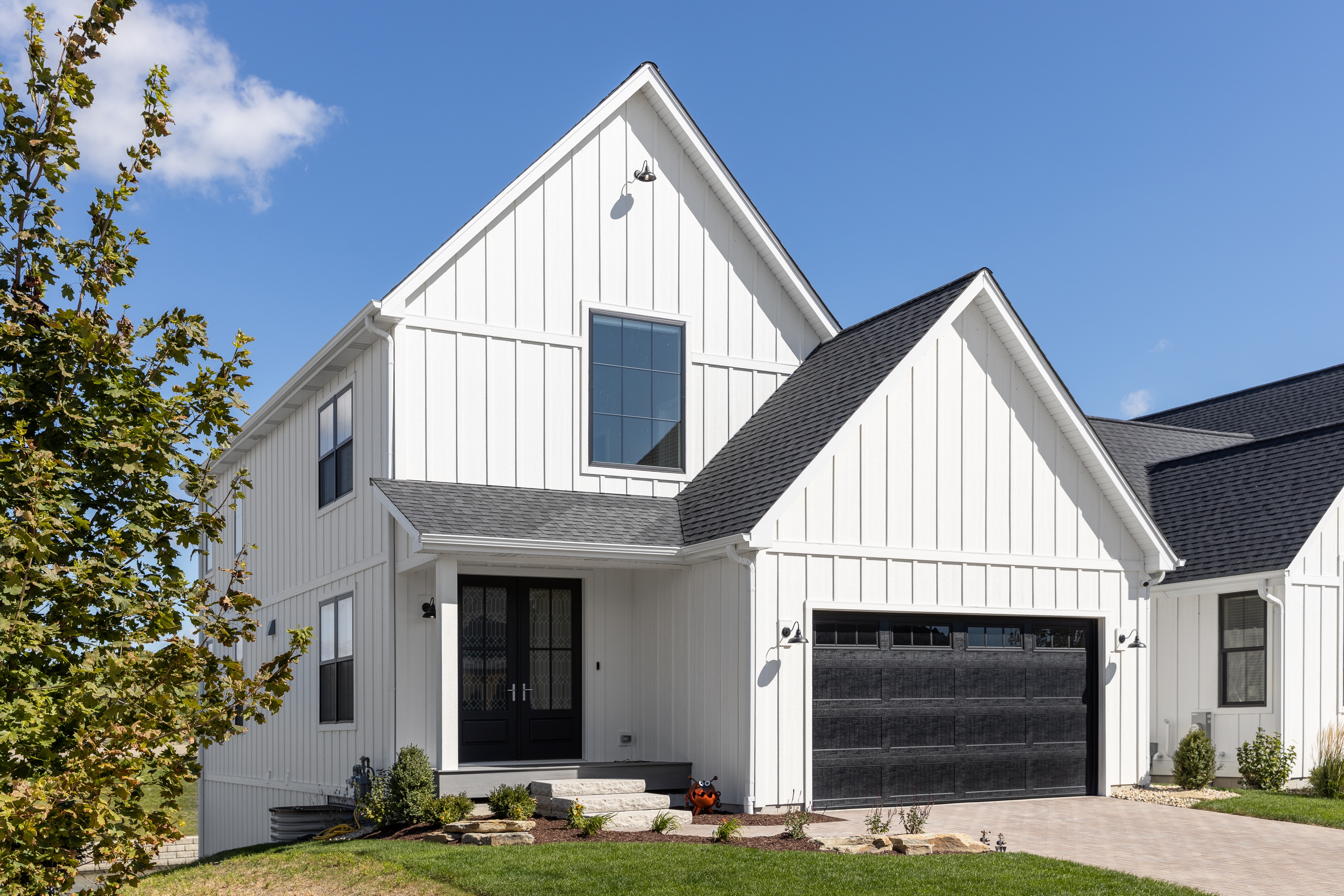
Board and batten siding is a vertical siding style that uses wide panels (boards) with narrow strips (battens) covering the seams to create deep shadow lines, strong visual texture, and architectural height. It works best on homes with clean wall planes and balanced proportions. It most often fails when homeowners chase the trend without adapting it to their specific house – and when the wrong material makes the whole look fall flat.
Best for: Homes needing stronger vertical definition; farmhouse, cottage, transitional, and select modern styles; gables, entry features, and front-facing walls that need visual impact.
Avoid if: The facade already has too many competing materials; the design is based purely on trend photos; there is no plan for how siding styles and trim will work together.
The Truth Most Contractors Won’t Tell You
You’ve seen the photos on Pinterest. The crisp white farmhouse with those long, clean vertical lines that look like they belong on a magazine cover.
Here’s what those photos don’t show: board and batten is one of the easiest siding styles to get completely wrong.
At Porter Family Exteriors, we’ve been serving homeowners across Media, Willow Grove, and Cherry Hill for over 50 years. We’ve watched people spend tens of thousands of dollars and end up with a house that looks like a striped box or a plastic barn. The regret is real – and almost all of it was preventable.
Here are the five mistakes that turn a dream exterior into a curb-appeal disaster.
Mistake #1: Choosing Proportions That Fight Your Home’s Scale
Board and batten lives and dies by rhythm. If the spacing is wrong, nothing else saves it.
On a large front elevation, battens too close together create visual noise – the house reads as a series of stripes, not an architectural statement. On a smaller home, battens too far apart make the design look flat and underdeveloped. Window placement compounds both problems. Battens that cut awkwardly against window trim make an exterior feel unresolved even if the material quality is excellent.
The board and batten farmhouse look works because of restraint – clean masses, well-scaled trim, measured contrast. Once the battens get too dense or the trim too heavy, it stops feeling timeless and starts feeling imitative.
Mistake #2: Using a Material That Can’t Deliver the Look You Want
This is the mistake we hear about most often when homeowners call us to fix what a previous contractor built.
Board and batten is about depth and shadow. That dimensional, magazine-quality look comes from material thickness and profile – not just the vertical pattern. Vinyl is a thin veneer. When vinyl battens sit over vinyl panels, the profile is shallow. From the street, the house can look flat – like the texture was painted on instead of built in. Vinyl also fades. The color you choose today may not be the color you have in 7 to 10 years.
James Hardie fiber cement is different. It is thick, heavy, and structural. When we install HardiePanel vertical siding, the battens sit proud of the board, creating a deep shadow line that actually shifts as the sun moves across the house. The result is a home that looks built, not wrapped.
Because James Hardie uses ColorPlus Technology – a factory-applied, kiln-baked finish – the color is engineered into the material. No peeling. No fading. No repainting every few years.
Porter Exteriors is a Double Crown James Hardie dealer – one of fewer than 2% of contractors in the country to hold that designation. Our crews are certified to install Hardie to manufacturer specs, which is what protects your 30-year non-prorated warranty.
How the Materials Stack Up: A Straight-Talk Comparison
| Feature | James Hardie ✓ | Vinyl | Wood / Engineered Wood |
|---|---|---|---|
| Shadow Line Depth | Deep architectural reveal that changes with sunlight | Shallow profile; looks flat from the street | Deep, but prone to splitting over time |
| Durability | Non-combustible; pest and rot resistant | Warps in heat; dents in hail | Susceptible to rot, woodpeckers, and moisture |
| Color Longevity | ColorPlus® factory finish resists fading, peeling, cracking | Fades within years; not repaintable | Requires repainting every 3–5 years |
| Longevity | 30–50+ years with 30-year non-prorated warranty | 15–20 years | 15–25 years with proper maintenance |
| True B&B Look? | Yes — the magazine look homeowners want | Flat appearance; looks like a ‘plastic barn’ | Yes, but risky long-term |
| Installed Cost (est.) | $14–$25 per sq. ft. | $10–$20 per sq. ft. | $15–$28 per sq. ft. |
Learn more about our James Hardie siding installation options or our vinyl siding installation and replacement services.
How Much Does Board and Batten Siding Actually Cost?
Let’s answer the question most contractors avoid.
Vinyl Board & Batten: $10-$20 per square foot installed
Vinyl is the budget entry point for this look. If cost is the primary driver, it is a real option – just go in with clear expectations. The shadow lines will be shallower, the color less stable, and the curb presence lighter than Hardie.
James Hardie Fiber Cement: $14-$25 per square foot installed
The higher cost reflects three things: a heavier material that requires specialized tools, a certified installation crew, and a 30-year non-prorated warranty that vinyl cannot match. You are not just paying for a look – you are paying for an exterior that holds its appearance for decades through Pennsylvania winters, summer heat, and everything in between.
What affects your specific number:
- Total square footage
- Full re-side vs. targeted accent application
- Trim complexity – window count, corner details, transitions
- Whether repairs or moisture remediation are needed first
- Your chosen Hardie profile and ColorPlus color
The best way to get an accurate number is to have us walk the exterior with you. We provide detailed written estimates – no vague ranges, no surprises.
Mistake #3: Choosing Color Based on a Trend Instead of Your Home
Color is not a finishing touch in board and batten design – it is part of the structure. Because the style depends on shadow lines, the wrong color can make the battens nearly invisible from the street.
All-white is not automatically safe. Without enough contrast at the roof, trim, and entry, everything blends together and the texture disappears. With Hardie’s ColorPlus system, the color you choose on day one is the color you will have on year fifteen. The palettes that work best are soft whites with deliberate contrast trim, warm greiges, muted greens, weathered blues, and deep charcoals used with discipline.
Mistake #4: Mixing Siding Styles Without a Clear Visual Hierarchy
Board and batten with horizontal siding can be one of the smartest layouts available – or one of the fastest ways to make a house look like it was designed by committee. The problem is almost always the same: two styles competing for attention without either one winning.
Vertical siding belongs on gables, entry projections, upper stories, and central masses that need definition. Horizontal siding belongs on the broader body of the home where calm and continuity matter. Transitions should happen where the architecture already provides a break – a floor line, a gable boundary, a porch return. The trim detail at that meeting point is what separates intentional from accidental.
Mistake #5: Treating Installation Like the Easy Part
Board and batten is especially unforgiving because crooked vertical lines are immediately obvious from the curb. Battens that drift out of plumb, reveals that vary panel to panel, and corners that do not close cleanly will undermine even an excellent material choice.
James Hardie’s 30-year non-prorated warranty requires certified installation. If your contractor is not a Preferred or Elite Preferred Hardie installer, that warranty protection can be compromised. As a Double Crown dealer, Porter Exteriors installs to full manufacturer specifications – and that is what protects your investment long-term.
Common Questions Homeowners Ask Us
Is board and batten only for farmhouse-style homes? No. It works on farmhouse, cottage, transitional, and select modern exteriors. The real requirement is that the architecture can support strong vertical lines.
Does board and batten make a house look taller? Yes, in most cases. The vertical rhythm creates an upward pull that makes wall height feel more pronounced – especially effective on homes with a wide, flat profile.
Why is James Hardie more expensive than vinyl? Hardie is heavier, requires specialized tools, and must be installed by a certified crew to protect the warranty. You are also getting a 30-year non-prorated warranty and a material that will not warp in summer heat or crack in a PA freeze. The cost difference is real – so is the difference in what you are getting.
Can board and batten be mixed with horizontal siding? Yes – and often it is the strongest approach. One style leads, one supports. Plan the hierarchy before the project starts.
What is the best material for board and batten siding? For homeowners who want the full architectural effect – deep shadow lines, long-term color stability, genuine durability – James Hardie is the clear recommendation. Vinyl can achieve a version of the look at a lower price point, but it will not deliver the same depth, longevity, or shadow-line presence.
How do I get a real price estimate? Contact Porter Exteriors for a written, detailed estimate. We serve homeowners across Media, Willow Grove, and Cherry Hill and walk every project before providing a number. Visit our siding services page to get started.
Board and batten can be one of the most impactful exterior decisions available – when the proportions are right, the material can hold the look, and the installation is done by people who know what they are doing. If any of those conditions are missing, the regret arrives slowly and costs more to fix than it would have cost to get right the first time.
Porter Family Exteriors has been getting this right for over 50 years. Browse our siding services or reach out directly to schedule a walk of your exterior.