Here’s what a fresh set of replacement windows won’t tell you at first glance: even brand-new windows can be installed poorly enough to cost you money for years. If your windows are drafty, sticking, or fogging up a single season after going in, poor window installation is usually the reason.
Across Delaware, Chester, Montgomery, and Bucks counties in Pennsylvania, New Castle County in Northern Delaware, along with Camden, Burlington, and Gloucester counties in South Jersey, freeze-thaw winters and humid summers test every seal. A bad installation rarely stays hidden for long.
The Short Answer: 5 Signs of Poor Window Installation
Walk your home and check for these five common warning signs before the next heating or cooling season:
- Drafts you can feel. Hold a hand near the edge of the sash on a windy day. A steady stream of air means the window wasn’t sealed or insulated properly at the rough opening.
- Water stains or active leaks. Staining on the sill, peeling paint below the frame, or moisture on the interior trim points to failed flashing or sealant. This is the most damaging sign to ignore.
- Excessive outside noise. If street traffic and neighborhood noise are suddenly easy to hear inside, the gaps around the frame were likely left unfilled.
- Sticking or hard-to-operate sashes. Windows that bind, stick, or won’t lock usually sit in an opening that was left out of square or poorly shimmed.
- Visible gaps or uneven trim. Uneven gaps around the frame, caulk lines doing too much work, or visible daylight are clear signs the unit wasn’t installed straight and even.
If one or more of these sounds familiar, the problem is worth addressing now, before the damage spreads.
What a Proper Window Installation Looks Like
Bad window performance is rarely a defective unit. It’s almost always the installation. Here is the sequence we follow on every project, and a fair benchmark for any installer you’re evaluating.
Before Install Day
- Inspection and options review. Your consultant inspects every window in the home and walks through style, series, and trim options—including composite upgrades like the Andersen® 100 Series.
- Tech measure. A separate field technician confirms every measurement and specification before anything is ordered.
On Install Day
- Protect the home. Drop cloths, plastic, and zip poles around every work area.
- Remove and inspect. The old window comes out and the opening is checked. Damaged framing is replaced, not covered up.
- Flash the sill. Pan flashing, flexible flashing through the corners, all integrated with the house wrap so water drains out instead of in.
- Set it plumb and level. Shimmed square so sashes glide and locks engage for the life of the window.
- Insulate and seal. Low-expansion foam between frame and studs, then everything caulked.
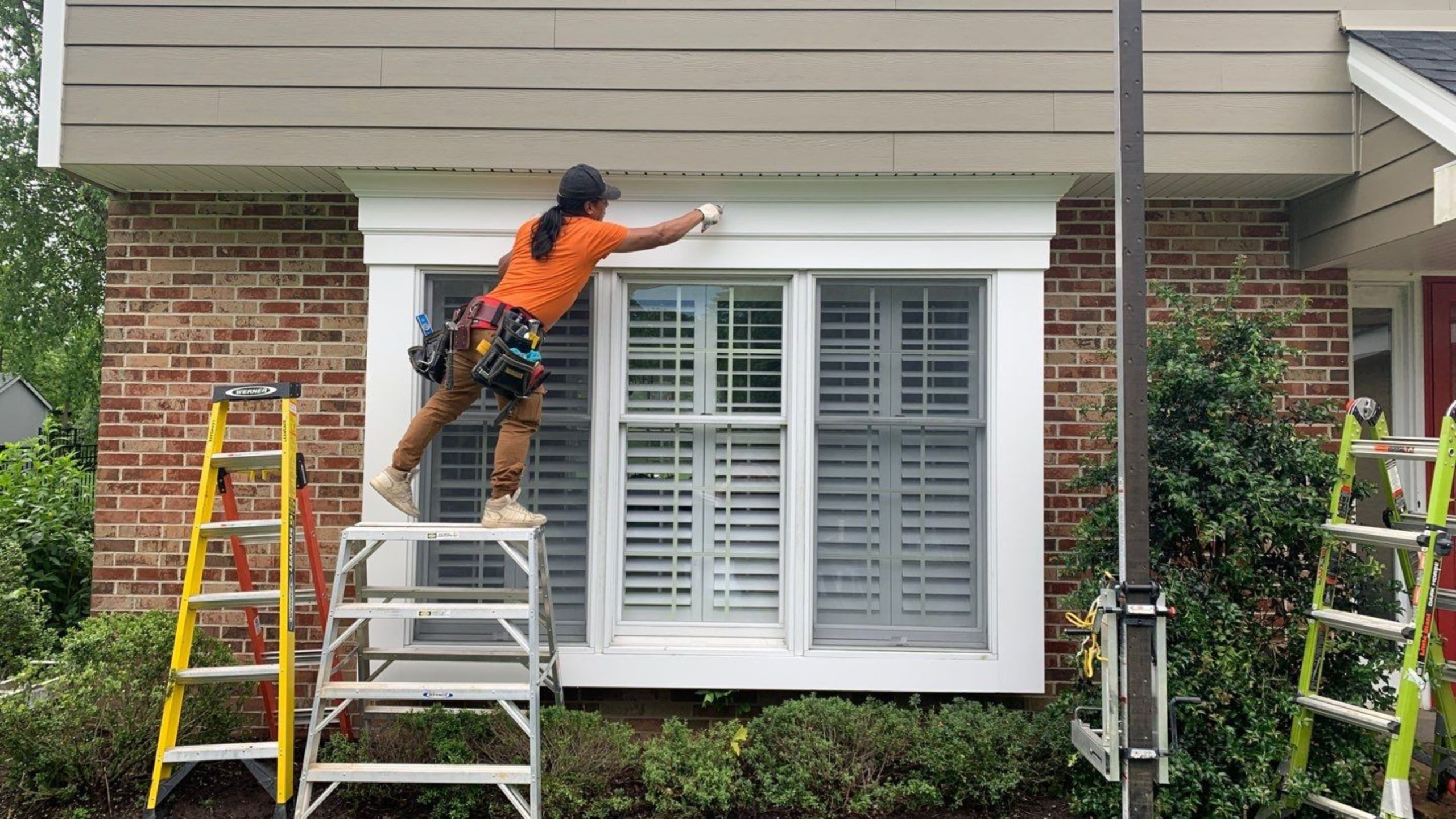
- Finish by method. Full-frame: trim removed, reinstalled, and left paint-ready. Insert: interior trim is never touched, and the exterior is sealed with custom-bent aluminum capping.
- Clean up. It should look like we were never there.
After Install
- Satisfaction survey. Every project closes with a survey, and we follow up on anything short of 100%.
Insert and full-frame are not interchangeable, and the right call depends on the condition of your existing frames. Only a knowledgeable window specialist can tell the difference and guide you to the installation method your home actually needs. If an installer can’t explain their flashing steps or why they’re recommending one method over the other, that’s your warning sign.
What Poor Installation Is Quietly Costing You
This is the part most homeowners don’t see until the bills or the damage arrive.
- Escalating energy loss. Gaps around a poorly installed window let conditioned air escape, raising monthly heating and cooling bills. A window’s rated U-factor (a measure of heat transfer; lower is better) offers little benefit if air moves around the frame instead of through the glass.
- Hidden moisture damage. When flashing and weather barriers are done wrong, water works into the wall cavity. In our freeze-thaw climate, trapped moisture expands and contracts through every cold snap, which accelerates frame rot, mold, and drywall damage. By the time a stain appears inside, the damage behind the drywall is usually worse.
- Paying twice for the same job. A bad install often means removing and reinstalling those same windows years earlier than you should have. The most expensive window is the one you have to pay for a second time.
Replacement windows are a significant investment. Installed double-hung windows at PFE typically run about 1,000–3,200 per window depending on size and series, and our Pennsylvania Window Pricing Calculator and New Jersey Window Pricing Calculator break down exact installed double-hung and specialty window ranges line by line.
Insert vs. Full-Frame: When the Wrong Method Causes Bad Results
Choosing the wrong replacement method is a frequent cause of window failure, and it comes down to two options:
- Insert replacement (pocket window). Sets a new window inside your existing frame. It’s faster, less invasive, and more affordable because interior trim is kept completely intact and the exterior is sealed with custom-bent aluminum capping. However, it’s only appropriate when the existing frame is structurally sound. Dropping an insert into a rotted or out-of-square frame traps the damage behind a brand-new window.
- Full-frame replacement. Removes the old window and interior/exterior trim completely down to the structural studs. It costs more and takes longer, but it is the only option when framing is damaged because it lets the installer inspect the rough opening, replace rotted studs, and apply modern flashing and insulation. When frames are rotted, leaking, or out of square, full-frame is the honest answer.
If a contractor recommends an insert without first inspecting the structural condition of your existing frames, treat that as a warning sign of its own.
What to Do If You Suspect Poor Installation
Don’t wait for winter to confirm what a draft is already telling you. The longer moisture sits in a wall cavity, the more expensive the repair becomes.
Start with an assessment from an installer who inspects the opening itself, not just the glass. Ask specifically how they handle flashing, insulation, and leveling at the rough opening, and whether your frames can support an insert or need full-frame replacement. Whether you need replacement windows anywhere in Pennsylvania, South Jersey, or Northern Delaware, a local installer who knows our housing stock and climate knows what a proper install in this region requires.
Porter Family Exteriors has been family-owned and serving homeowners across southeastern Pennsylvania, South Jersey, and Northern Delaware since 1976. We are an Andersen Certified Elite Contractor with a 5-star Google rating across all three of our locations, setting every window to the exact condition of the opening rather than following a one-size-fits-all approach.
Explore our window replacement services, preview window styles and trim with our 3D Design Preview Tool, or learn about flexible payment options on our Financing Page.
Frequently Asked Questions
Can poorly installed windows be fixed without full replacement?
Sometimes. If the window unit itself is sound and the issue is limited to caulking, flashing, or insulation at the perimeter, a corrected reinstallation can resolve it. If moisture has already rotted the wood framing, full-frame replacement is required.
How soon after installation do problems show up?
Often within the first year. Drafts and sticking sashes appear during the first cold or windy week, while moisture damage takes a season or two to surface as interior staining or wood decay.
Are drafts always a sign of bad installation?
Not always, but they’re one of the most reliable indicators. A properly installed, properly sealed window shouldn’t let you feel a steady stream of air around its edges.
Should I choose insert or full-frame replacement?
It depends on frame condition. If your existing frames are square, dry, and structurally sound, insert replacement is a cost-effective option. If frames are rotted, leaking, or out of square, full-frame replacement is the only way to eliminate hidden damage.
Schedule Your Window Evaluation
Whether you need insert or full-frame replacement windows, contact Porter Family Exteriors today at (610) 870-4302 or schedule your consultation online. Our team serves Delaware, Chester, Montgomery, and Bucks counties in Pennsylvania, New Castle County in Delaware, and Camden, Burlington, and Gloucester counties in South Jersey. We’ll inspect your openings, evaluate frame health, and give you a clear, written scope for your project.
About the Author
Justin Porter
CEO, Porter Family Exteriors
Justin Porter is CEO of Porter Family Exteriors, the second-generation exterior remodeling company his father, Roy Porter, founded in 1976 and that Justin now runs with Roy and his three brothers from offices in Media, Willow Grove, and Cherry Hill. In his 20-plus years in the business, Justin has helped make PFE the only contractor in the Northeast to hold both the James Hardie President’s Club, for the highest Hardie install volume in the region, and the James Hardie Service Excellence Award, for the highest customer satisfaction, two years running, alongside GAF Master Elite President’s Club and Andersen Certified Elite Contractor status and a 5-star Google rating across all three locations. He writes about James Hardie siding, stucco remediation, roofing, and window replacement for homeowners across Pennsylvania, New Jersey, and Northern Delaware.