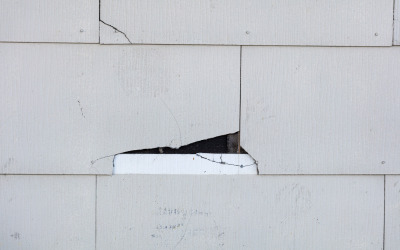
Visual clues can help you decide whether older siding might contain asbestos, but they cannot confirm it. Suspect asbestos cement siding often appears as rigid rectangular shingles installed in overlapping rows. Common clues include a cement-like or chalky surface, pressed wood grain or wavy patterns, and two or three visible nail heads. A home that was built or re-sided before the early 1980s deserves extra caution.
Only laboratory testing can confirm whether siding contains asbestos. Do not pry off a panel, break a corner, sand the surface, or try to collect a sample yourself. If the siding is damaged or a renovation may disturb it, contact a trained and accredited asbestos professional for inspection and sampling.
| QUICK ANSWER Look for a combination of age, shape, texture, pattern, and nail placement. No single feature proves that siding contains asbestos. Treat older cement-like shingles as suspect until a qualified laboratory test provides an answer. |
What Does Asbestos Siding Look Like?
Most exterior asbestos siding is an asbestos cement product. The fibers were bound into cement, producing a hard shingle or panel that can resemble wood, slate, stucco, or modern fiber cement. Because several siding materials share these features, look for a combination of clues rather than relying on one detail.
1. The Siding Appears to Date From Before the Early 1980s
The age of the siding is one of the most useful starting points. If it appears original to an older home or was installed during a remodel before the early 1980s, asbestos is possible. Check property records, old permits, invoices, dated photographs, or information from a previous owner. The age of the house alone is not proof because an older home may have been re-sided later.
2. It Is Made of Individual Rectangular Cement Shingles
Many asbestos cement siding products were manufactured as rigid rectangular shingles, often about 12 by 24 inches. Some were smaller, larger, or shaped differently. Measure only from a safe distance and do not loosen a panel to check its dimensions.
3. The Shingles Are Installed in Overlapping Horizontal Rows
Suspect siding may appear in separate shingles arranged in overlapping courses with staggered vertical joints. This can make it look similar to wood shingles or newer fiber cement. Long vinyl panels, by contrast, usually create more continuous horizontal runs.
4. The Surface Has a Pressed Pattern or Wavy Edge
Asbestos cement shingles came in several finishes. Some have a pressed wood grain, shallow vertical grooves, a textured surface, or a wavy lower edge. Others are smooth. A familiar pattern can raise suspicion, but the same design may also appear on asbestos-free siding.
5. Two or Three Nail Heads Are Visible Near the Lower Edge
Some older cement shingles have two or three exposed nail heads or nail holes near the bottom edge. Nail placement varies by product and installation, so this clue should be considered together with the siding’s age, dimensions, and texture.
6. The Material Looks Dense, Chalky, or Brittle
Weathered asbestos cement siding may look dense and cement-like, with a dull or chalky surface. Damaged edges can appear rough and brittle. Do not touch, tap, bend, or break a panel to judge how it feels. Physical handling can damage older material and release dust.
7. Product Markings Are Missing or Inconclusive
A visible manufacturer name, product label, or installation record may help identify the siding. Some asbestos-free products have codes or labels, but an absent code does not prove that asbestos is present. Markings are often on the back, and homeowners should not remove a shingle just to look for them.
Clues That Do Not Confirm Asbestos
Several common observations may show that siding is old, but they are not reliable proof of asbestos on their own:
- Multiple layers of paint
- A gray, faded, or chalky appearance
- A house built before 1980
- A 12 by 24 inch shingle size
- A missing manufacturer code
- A visual match with a photograph found online
These details can justify a closer professional review, but a qualified laboratory test is the only way to confirm the material.
| Still Unsure What Type of Siding Is on Your Home? Avoid disturbing material that may contain asbestos. Porter Family Exteriors can review the visible condition of your siding and help you plan the appropriate next step. Request a Siding Evaluation Learn About Asbestos Siding Removal |
How to Confirm Asbestos Siding Safely
A visual review can identify suspect siding, but confirmation requires professional sampling and laboratory analysis. Follow these steps without disturbing the material.
1. Leave the Siding in Place
Do not drill, sand, scrape, saw, pry, or remove a shingle. Do not collect a sample yourself. If a panel is already cracked or loose, keep people and pets away from the area and avoid creating dust.
2. Document What You Can See
Take clear photographs from a safe distance. Note the approximate shingle size, pattern, nail placement, damaged areas, and the estimated installation date. Gather old permits, invoices, or product information if they are available without handling the siding.
3. Decide Whether Testing Is Needed
The U.S. Environmental Protection Agency recommends testing suspect material when it is damaged or when planned renovation work may disturb it. Intact material that will remain undisturbed may not need immediate testing.
4. Use a Trained Professional and Qualified Laboratory
A trained and accredited asbestos inspector can determine where and how to sample while minimizing fiber release. The collected sample should be analyzed by a qualified laboratory. Ask for written results and keep them with your home records for future repairs, sales, or renovations.
What to Do If the Siding Is Damaged
Damaged material deserves prompt professional attention because cutting, cracking, scraping, or improper removal can release fibers. EPA homeowner guidance advises avoiding contact with suspect debris and leaving major repair or removal to trained and qualified professionals.
- Stop exterior work near the damaged area.
- Do not sweep, vacuum, pressure wash, or bag suspect debris yourself.
- Keep children, pets, and unnecessary foot traffic away.
- Contact a qualified asbestos professional before cleanup or repairs begin.
- Confirm local removal, transport, and disposal requirements before the project starts.
Can Intact Asbestos Siding Be Left in Place?
Intact asbestos-containing material is less likely to release fibers when it remains in good condition and is not disturbed. That does not mean every home has the same answer. The siding’s condition, planned repairs, local requirements, and future renovation goals all affect the appropriate next step.
For a deeper look at health considerations and material choices, read Asbestos Siding 101 and What to Replace It With.
Planning a Repair or Siding Replacement
Tell every contractor that the siding may contain asbestos before anyone drills, removes fixtures, replaces windows, or starts demolition. Confirm whether testing is needed, who will handle suspect material, how debris will be contained, and where it will be disposed of.
If removal is part of the project, review Porter’s approach to professional asbestos siding removal and schedule a consultation before work begins.
Frequently Asked Questions About Identifying Asbestos Siding
Can You Identify Asbestos Siding Just by Looking at It?
No. Age, shingle size, texture, pattern, and nail placement can indicate that siding may contain asbestos, but visual clues cannot provide confirmation. A qualified laboratory must analyze a properly collected sample.
What Years Was Asbestos Siding Commonly Used?
Asbestos-containing building products were widely used during much of the twentieth century, particularly before the early 1980s. A home’s construction date is only a starting point because siding may have been installed during a later renovation.
Does Every 12 by 24 Inch Cement Shingle Contain Asbestos?
No. That size is associated with many older asbestos cement shingles, but asbestos-free products can have similar dimensions and designs. Size must be evaluated with other clues and confirmed through testing.
Can I Remove a Shingle to Check the Back for a Code?
No. Removing a panel can crack brittle material and create dust. Look only for markings that are already visible or check records and leftover product packaging. Let a trained professional collect any sample that is needed.
Should I Tap the Siding to Hear What It Sounds Like?
No. Sound is not a reliable way to confirm asbestos, and tapping damaged or brittle siding is unnecessary contact. Use visual clues from a safe distance and rely on professional testing for confirmation.
Is Intact Asbestos Siding an Immediate Emergency?
Not usually. Material that is intact and left undisturbed is less likely to release fibers. Seek professional guidance if the siding is cracked, crumbling, creating debris, or likely to be disturbed by repairs or remodeling.
The Safest Takeaway
You may be able to recognize signs of possible asbestos cement siding, but you cannot confirm it by sight. Leave suspect material undisturbed, document what you can see, and arrange professional inspection and laboratory testing when damage or planned renovation makes confirmation necessary.