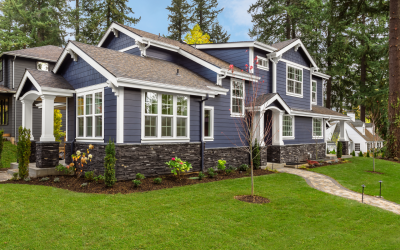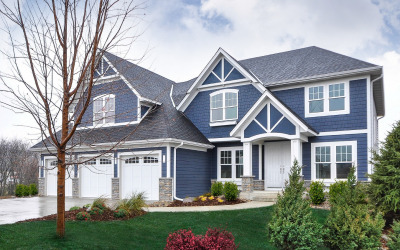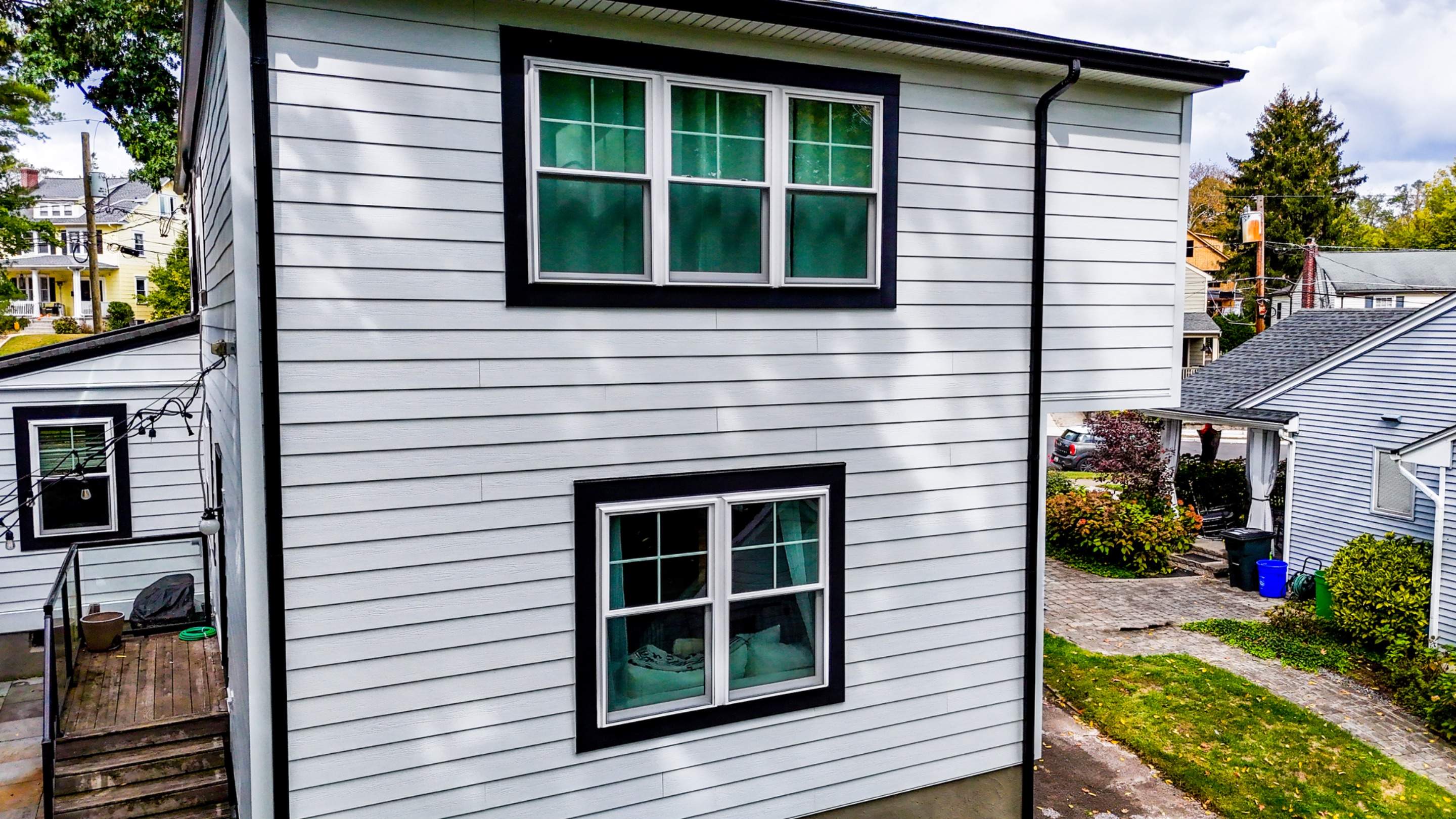
“Hardie board” is not a product name. It is a catch-all homeowners use for any James Hardie® fiber cement siding. The two products you are almost certainly choosing between are HardiePlank® lap siding, which runs horizontally, and HardiePanel® vertical siding, which creates the board-and-batten look. If you searched this topic and came away more confused than when you started, you were comparing a specific product to a generic nickname.
Here is the real difference, the rest of the Hardie product line people mix up along with it, and how to decide which one belongs on your house.
The Short Answer
- HardiePlank® lap siding: Horizontal. Best for classic, colonial, craftsman, and traditional elevations, and for direct replacement of existing wood or vinyl lap siding.
- HardiePanel® vertical siding: Vertical sheets. Best for board and batten, modern farmhouse, and contemporary designs, and for adding vertical definition to gables and entry features.
- “Hardie board”: Not a product. If it appears on your written estimate instead of a specific product name and profile, ask the contractor to correct it before you sign.
The Five James Hardie Products Homeowners Confuse
Plank versus panel is the main decision, but “Hardie board” gets applied to the entire line. Knowing what is actually available changes what you ask for.
- HardiePlank® lap siding: Horizontal lap boards. This is the most widely installed fiber cement product in the country and the default choice on most Philadelphia-area homes.
- HardiePanel® vertical siding: Large vertical sheets available in 4×8, 4×9, and 4×10 foot dimensions. Paired with HardieTrim® battens, this is what produces board and batten.
- HardieShingle® siding: A shingle or shake appearance available in 4-foot straight-edge or staggered-edge panels, decorative half-rounds, and individual shingles in multiple widths. Common on gables, dormers, and cottage-style accents where lap siding would feel flat.
- Hardie® Architectural Panel: Part of the Hardie™ Architectural Collection, offered in large-format panels with contemporary textures like Fine Sand, Fine Sand-Grooved, and Mounded Sand for sleek designs with minimal visible seams.
- HardieTrim® boards: Corner boards, window and door surrounds, and the battens themselves. Not siding, but it is where a fiber cement job visibly succeeds or fails. Vinyl or wood trim on a Hardie installation is a shortcut you will see from the curb.
HardiePlank® vs. HardiePanel®: A Direct Comparison
| Feature | HardiePlank® (horizontal) | HardiePanel® (vertical) |
| Product name | HardiePlank® lap siding | HardiePanel® vertical siding |
| Orientation | Horizontal lap boards | Vertical sheets with battens |
| Common styles | Traditional, colonial, craftsman, Cape Cod | Board and batten, modern farmhouse, contemporary |
| Best for | Classic curb appeal; direct replacement of wood or vinyl lap siding | Board-and-batten look; vertical definition on gables, entries, and mixed-material designs |
| Installation demand | Well within reach of any competent crew | Highly demanding. Layout must be planned before the first sheet goes up |
| ColorPlus® Technology | Available | Available |
| Product warranty | 30-year non-prorated substrate warranty | 30-year non-prorated substrate warranty |
| ColorPlus® finish warranty | 15-year against peeling, chipping, cracking | 15-year against peeling, chipping, cracking |
| Usually confused with | “Hardie board” | “Hardy panels” or “Hardie board” |
Installed pricing for both products is covered on our primary James Hardie Siding Cost Page.
Profile and Reveal: The Decision Most Homeowners Do Not Know They Are Making
Once you have chosen plank or panel, there is a second decision that shapes how your house reads from the street, and most estimates never raise it.
Texture. HardiePlank® is offered in Select Cedarmill® (a subtle woodgrain) and Smooth (a flat modern finish), along with Beaded profiles for traditional and colonial homes. On a stone colonial in Delaware County, Select Cedarmill reads as authentic. On a mid-century or contemporary elevation, Smooth is usually the stronger choice. This is not a small detail. It is the difference between siding that looks original to the house and siding that looks applied to it.
Reveal width. Lap siding is specified by exposure, which measures how much of each board is visible once installed. Planks come in widths from 5¼ inches to 12 inches, creating visible exposures between 4 inches and 10¾ inches. Narrower reveals read as traditional and add apparent height. Wider reveals read as contemporary and calm a busy facade. On a wide ranch or split-level, a wider reveal quiets the elevation. On a narrow twin or rowhome, a narrower reveal keeps the proportions honest.
Batten spacing on board and batten. Battens have to land on structure, which means spacing options are limited by framing before aesthetics enter the conversation. Battens too close together turn a facade into stripes. Too far apart, and the design falls flat. We cover proportion mistakes in detail in our guide to 5 Board and Batten Mistakes That Ruin Your Curb Appeal.
If a contractor hands you a quote that says “fiber cement siding” without naming the product, texture, and exposure, three of your four appearance decisions are being made for you by whoever is buying the material.
Is James Hardie Siding Worth the Cost?
Whichever product you choose, the core advantages are the same. Fiber cement resists rot, warping, and cracking. It is non-combustible, and it holds up through the freeze-thaw cycles that define winters across Delaware, Chester, Montgomery, and Bucks counties, as well as Camden, Burlington, and Gloucester counties in South Jersey.
Two warranties matter, and they are completely different coverages. The product carries a 30-year non-prorated warranty, meaning it pays out at full value whether the siding has been up for three years or twenty-eight. ColorPlus® Technology, the factory-applied and kiln-baked finish, carries a separate 15-year warranty against peeling, chipping, and cracking. Field-painted siding does not carry that finish coverage.
Vinyl is a legitimate lower-cost option, and we install it. Be clear-eyed about the tradeoff: vinyl color typically fades noticeably within seven to ten years. While faded vinyl can be coated with vinyl-safe paint, doing so generally voids the manufacturer’s finish warranty and rarely holds up on south- and west-facing walls. If you plan to stay in the house more than ten years, the long-term math favors fiber cement. If you are selling in three, it may not.
Which One Should You Choose? A Goal-by-Goal Guide
- You want a classic, traditional look: HardiePlank® lap siding.
- You want board and batten or modern farmhouse: HardiePanel® vertical siding with HardieTrim® battens.
- You are replacing existing horizontal wood or vinyl lap siding: HardiePlank® is a direct swap in both profile and installation method.
- You want deep shadow lines and a built, architectural look: HardiePanel® with battens. The material sits proud of the field, and the shadow shifts as the sun moves across the house—something a thin veneer cannot reproduce.
- You want to mix styles on one elevation: Both. HardiePlank® on the main body with HardiePanel® on gables or entry projections is one of the most common combinations we install across the Philadelphia metro area and South Jersey. The rule is hierarchy: one style leads, the other supports.
- You want to see it on your own house before deciding: Use our 3D Design Preview Tool to put real Hardie profiles and ColorPlus® colors on a photo of your home, or browse completed local projects in our Siding Photo Gallery.
Mid-Post Call to Action: Still deciding between horizontal and vertical? Our free James Hardie Siding Guide walks through profiles, textures, ColorPlus® colors, and what belongs on your style of home.
Why Does Board and Batten Cost More to Install?
The price difference between HardiePanel® and standard lap siding is not arbitrary. Board and batten is one of the most technically demanding siding installations in exterior remodeling, and the finished product makes every shortcut visible.
The large sheets have to land precisely on studs. Layout planning happens before a single panel goes up, because a sheet that misses a stud is a problem that surfaces months or years later when panels begin to shift or pull loose. Once field panels are set, battens are mechanically fastened with stainless steel finish nails driven into solid framing, and only nail heads receive touch-up.
That last detail matters more than it sounds. Crews that use standard siding nails leave oversized nail heads marching up every batten. Crews that brush touch-up paint across the full board-and-batten surface to hide blemishes create a different problem: factory-applied ColorPlus® finishes and field-applied paint age at different rates. Within a few years, the siding develops an uneven, speckled appearance that cannot be corrected without refinishing the full wall.
The correct installation is more precise, more time-consuming, and requires experienced hands at every step. That is where the cost goes, not into the material.
On a colonial renovation we recently handled in Media, PA, the previous contractor nailed board-and-batten panels directly into aging wall sheathing without landing fasteners on structural studs. To cover installation blemishes, the crew brushed field paint over large sections of factory ColorPlus® finish. Within three years, the panels began shifting out of alignment and the painted areas faded into chalky, discolored patches. Our team tore the siding down to the framing, repaired the underlying moisture damage, installed proper weather barrier wrap, aligned every vertical sheet dead-center on structural studs, and fastened stainless steel battens without brushing paint across factory finishes.
Why the Installer Matters as Much as the Product
James Hardie’s product warranty covers manufacturing defects. What it does not cover is poor installation, and that distinction is where homeowners get hurt. A board-and-batten installation with panels that miss studs, battens fastened with wrong hardware, or touch-up paint dragged across factory finishes will fail regardless of how good the material is. The warranty will not help.
Porter Family Exteriors is a James Hardie Elite Preferred Contractor. You can verify this designation yourself on James Hardie’s contractor locator before signing a contract.
We are also a James Hardie Double Crown Dealer, a distinction held by fewer than 2% of contractors in the country. We are the only company in the Northeast to win both the James Hardie President’s Club Award and the James Hardie Service Excellence Award two years running. President’s Club reflects high installation volume in the region, while the Service Excellence Award reflects customer satisfaction scores. Winning both consecutively means high volume never comes at the expense of workmanship.
We have been installing exteriors across southeastern Pennsylvania and South Jersey since 1976, holding a 5-star rating on Google across all three of our locations. If you want to know what separates a real Hardie estimate from a low bid, we break it down line by line in our guide to What Is Hiding Inside a Fiber Cement Quote.
Frequently Asked Questions
Is Hardie board the same as Hardie plank?
Not quite. “Hardie board” is an informal term for any James Hardie fiber cement product. HardiePlank® is a specific product, specifically horizontal lap siding. When a contractor writes “Hardie board” on an estimate, ask which product, texture, and exposure they plan to install.
What is the difference between HardiePlank and HardiePanel?
Orientation and application. HardiePlank® is horizontal lap siding used across the main body of most homes. HardiePanel® is a vertical sheet product used with battens to create board and batten, or used on gables and entry features for vertical definition. Both are fiber cement and both carry the same product warranty.
Does the choice affect my warranty?
No. Both products carry the same James Hardie product warranty. What the warranty does not cover is poor installation. Choosing a certified Elite Preferred Contractor is the single most important decision in protecting your long-term investment.
Which one lasts longer?
Neither has a material lifespan advantage because both use identical fiber cement. Board and batten has more failure points in practice because vertical panels and battens depend on precise fastening into structure. Installed correctly, both last decades. Installed poorly, board and batten shows failure first.
Can HardiePanel be installed over my existing siding?
We do not recommend it, and in most cases it should not be done. Panels need to fasten directly into sound structure. Covering old siding hides moisture damage and rot that a complete tear-off would find. This is especially true on Philadelphia-area homes with failing stucco, where what is behind the surface is usually the whole story.
Do I ever have to paint ColorPlus® siding?
Not on the schedule that field-painted siding requires. ColorPlus® is factory-applied and kiln-baked rather than brushed on site, carrying a 15-year finish warranty against peeling, chipping, and cracking. Most homeowners repaint only if they want a different color down the road.
How much does James Hardie siding cost in the Philadelphia area?
Installed cost depends on the product, home complexity, tear-off requirements, and elevation trim work. We publish current ranges on our main James Hardie Siding Cost Page, and every estimate we write is a detailed written number rather than a loose range.
How do I verify a James Hardie installer?
Check Elite Preferred Contractor status directly on James Hardie’s contractor locator. Ask for a physical business address. Request references from jobs completed in your area within the last two years. Philadelphia-area housing stock and our freeze-thaw climate create installation challenges that local experience anticipates and an out-of-market crew does not.
Interested in a free estimate from a James Hardie Elite Preferred Contractor? Contact Porter Family Exteriors today. We serve the Philadelphia metro area and South Jersey from offices in Media, Willow Grove, and Cherry Hill—covering Delaware, Chester, Montgomery, and Bucks counties in Pennsylvania, as well as Camden, Burlington, and Gloucester counties in New Jersey.
Browse our James Hardie Siding Services Page to see the full product line, compare options on our Siding Overview Page, or preview profiles and colors on a photo of your own house with our 3D Design Preview Tool.
When you are ready, schedule a walkthrough with our team. We will measure the elevation, evaluate the structure underneath, and provide a detailed written estimate with no vague ranges and no surprises.