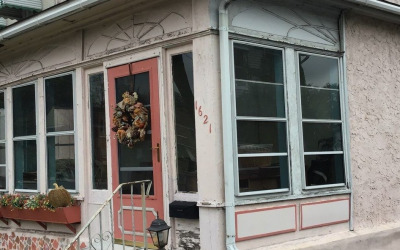
Most homeowners don’t realize their stucco is failing until the wood framing underneath has already started to rot. If you live in a home built between 1990 and 2010 in the Philadelphia area or South Jersey, the question usually isn’t whether you have moisture behind your stucco. It’s how much.
The short answer: walk the perimeter of your home and look for cracking near windows and doors, brown staining or white chalky deposits on the surface, and any areas that feel soft or sound hollow when tapped. Take photos of everything you find and call a stucco professional. But understand this: the most dangerous sign of stucco damage is no sign at all.
Why Your Stucco is Probably Failing
Stucco is porous by design. It relies on a weather-resistant barrier behind the cladding, correct flashing at every penetration, and a clear drainage path at the base of the wall to move water back out. When any of those components fail, water enters the wall system and has nowhere to go.
From the early 1990s into the 2000s, stucco was installed incorrectly on a massive scale across the Philadelphia metro area and South Jersey. The application was made far too thin, often just 3/8 of an inch. Any water the stucco absorbed went straight to the weather-resistant barrier behind it, and the building wraps used at the time were not designed to handle that level of sustained moisture. Freeze-thaw cycles every winter made it worse. This was not a one-off problem. It was an industry-wide failure that affected tens of thousands of homes.
Building codes have since changed significantly. Stucco is now required to be at least 3/4 of an inch thick, and full drainage systems behind stucco, stone, and brick are mandatory. Homes built to current code are in a much better position. Homes built between the early 1990s and roughly 2010 are not.
Once water is trapped inside the wall, it saturates the building wrap, wood sheathing, and framing. The stucco surface can look completely normal while $50,000 worth of rot is developing behind it.
The 5-Minute Inspection: What to Look for Right Now
Walk each elevation of the home separately and photograph every issue you find. Location and date matter, so add a note with each photo.
- If your home was built after 2010, check the weep screed at the bottom of the stucco to confirm it is not blocked by soil, mulch, or landscaping. Most homes built before 2010 do not have weep screeds at all.
- Inspect all window and door edges for cracking, staining, or gaps in the sealant. Current code requires a full 1/2 inch of caulk between dissimilar materials like windows and stucco. On older homes, the stucco often ran directly to the window frame with no gap, which is one of the most common water entry points.
- Check caulk at every pipe, conduit, and HVAC penetration for gaps or shrinkage
- Tap the surface across the full wall and note any hollow-sounding or soft areas
- Look for staining, efflorescence (white chalky deposits), or bubbling anywhere on the stucco surface
- Check interior walls adjacent to exterior stucco for peeling paint, moisture stains, or musty odors
The Invisible Threat: When a House That Looks Fine Isn’t
The warning signs above are worth looking for, but here is what makes stucco damage different from most home problems: visible symptoms are not always present. A home can show zero outward signs while moisture has been quietly working through the wall assembly for years.
This is why a visual inspection alone is not enough for any home built between 1990 and 2010. A qualified contractor will probe suspect areas and assess the wall assembly in ways a homeowner cannot. They are looking for soft substrate, compromised building wrap, and evidence of long-term water movement that never made it to the surface.
The most dangerous sign of stucco damage is no sign at all. If your home falls in that window and has never been professionally assessed, that is the most important takeaway from this post.
Repair vs. Remediation: Why Patching is Usually a Waste of Money
A stucco repair addresses a specific damaged area on the surface. It fills a crack, reapplies a patch, repaints. If there is no moisture behind the wall, a repair is appropriate. But if water has already entered the wall system, sealing the surface traps it inside. The wall cannot dry. The damage accelerates. And in six to twelve months, the same problem is back, often worse.
Stucco remediation is a different scope of work entirely. It involves removing the compromised stucco and any damaged substrate material down to the framing, repairing structural damage, installing a code-compliant weather-resistant barrier with proper flashing at every penetration, and re-cladding the exterior. The exterior does not always go back as stucco. Many homeowners choose to transition to James Hardie fiber cement siding, which eliminates the risk of future stucco failure. The trade-off is an aesthetic change: Hardie siding has a different look than traditional stucco, and that matters on some homes more than others. Either way, Porter Family Exteriors completes full walls corner to corner so everything is properly flashed and integrated.
For a small Philadelphia-area home, the full remediation process typically runs 2 to 4 weeks. For a larger home with significant moisture damage, plan for 4 to 8 weeks. The variables are home size, the scope of the damage, and Pennsylvania weather.
What Does Stucco Remediation Actually Cost?
Most stucco remediation projects in the Philadelphia area range from $35,000 to $150,000 depending on home size, the extent of the moisture damage, and whether structural repair is needed. Projects that include replacement windows alongside the remediation can exceed $300,000.
The earlier the damage is caught, the less work is involved. A home assessed before the framing is compromised is a very different project than one where rot has spread through multiple walls.
Porter Family Exteriors provides detailed written estimates with no vague ranges and no surprises. If you are getting quotes from multiple contractors, make sure each one is scoping the same work. A quote that looks significantly lower is usually missing something. Learn more about our stucco remediation services, or explore our full home remodeling solutions.
Frequently Asked Questions
Do cracks always mean there is water damage?
Not always, but every crack is a potential entry point. Cracks near windows, doors, or penetrations are higher risk. If you notice staining or softness around a crack, have it professionally assessed rather than waiting.
Can I just patch the cracks and repaint?
Only if there is no active moisture behind the stucco. Sealing over trapped moisture prevents the wall from drying and accelerates damage. A professional assessment before any cosmetic work is the right call.
My house looks fine. Do I still need an inspection?
If your home was built between 1990 and 2010, yes. The most common presentation of stucco moisture damage is no visible presentation at all. By the time you can see it, the damage is usually significant.
Should I go back with stucco or switch to James Hardie?
Most clients choose James Hardie because it eliminates the risk of future stucco failure and requires less long-term maintenance. The trade-off is aesthetic: Hardie siding looks different from traditional stucco, and that matters more on some homes than others. Both are legitimate options, and the right choice depends on your home, your goals, and your budget. We will walk you through both during the assessment.
Ready to Find Out What is Behind Your Stucco?
Reach out to our team to schedule a free quote on stucco remediation. Porter Family Exteriors has been serving homeowners across the Philadelphia metro area and South Jersey since 1976, and we start every project with a thorough assessment so you know exactly what you are dealing with before any work begins.