Most Philadelphia-area roofs have a ventilation problem, and most homeowners have no idea. The damage doesn’t start at your shingles. It starts in your attic, where trapped heat and moisture quietly rot the roof deck, warp framing, and shorten a roof’s lifespan by years before a single shingle shows a symptom.
Here’s what proper roof ventilation is, why it matters in this climate, and how to tell in five minutes whether yours is working.
What is Roof Ventilation?
Roof ventilation is a system of intake and exhaust vents that moves air continuously through your attic space. Intake vents (typically in the soffits) pull cool air in at the low end. Exhaust vents (at or near the ridge) let hot, moist air escape at the top. The standard building code requirement is one square foot of net free ventilation per 150 square feet of attic floor space, split evenly between intake and exhaust. Most older homes in the Philadelphia metro area don’t meet it.
Why the Intake Side is the One Most Contractors Get Wrong
Homeowners and even some contractors focus on exhaust and ignore intake. That’s a problem. If you add ridge vents or box vents without matching intake capacity, the exhaust system pulls conditioned air up from your living space instead of outside air up from the soffits. Your attic still overheats. Your energy bills go up. And the ventilation system you paid for doesn’t actually work.
The fix isn’t more exhaust. It’s balance. Intake capacity should equal or slightly exceed exhaust capacity. For most homes, that means making sure soffit vents are open, unblocked, and sized to match whatever’s happening at the ridge.
How to Spot Ventilation Problems in 5 MinutesIn older rowhouses and colonials throughout Delaware County, Montgomery County, and South Jersey, soffit vents are often painted over, filled with debris, or blocked entirely by insulation pushed against the eave. That’s the most common ventilation failure we find in the Philadelphia market, and it’s invisible until you know where to look.
Common Types of Roof Vents and When Each One is the Right Call
Different roof shapes and home designs call for different solutions. Here are the most common roof vent types:
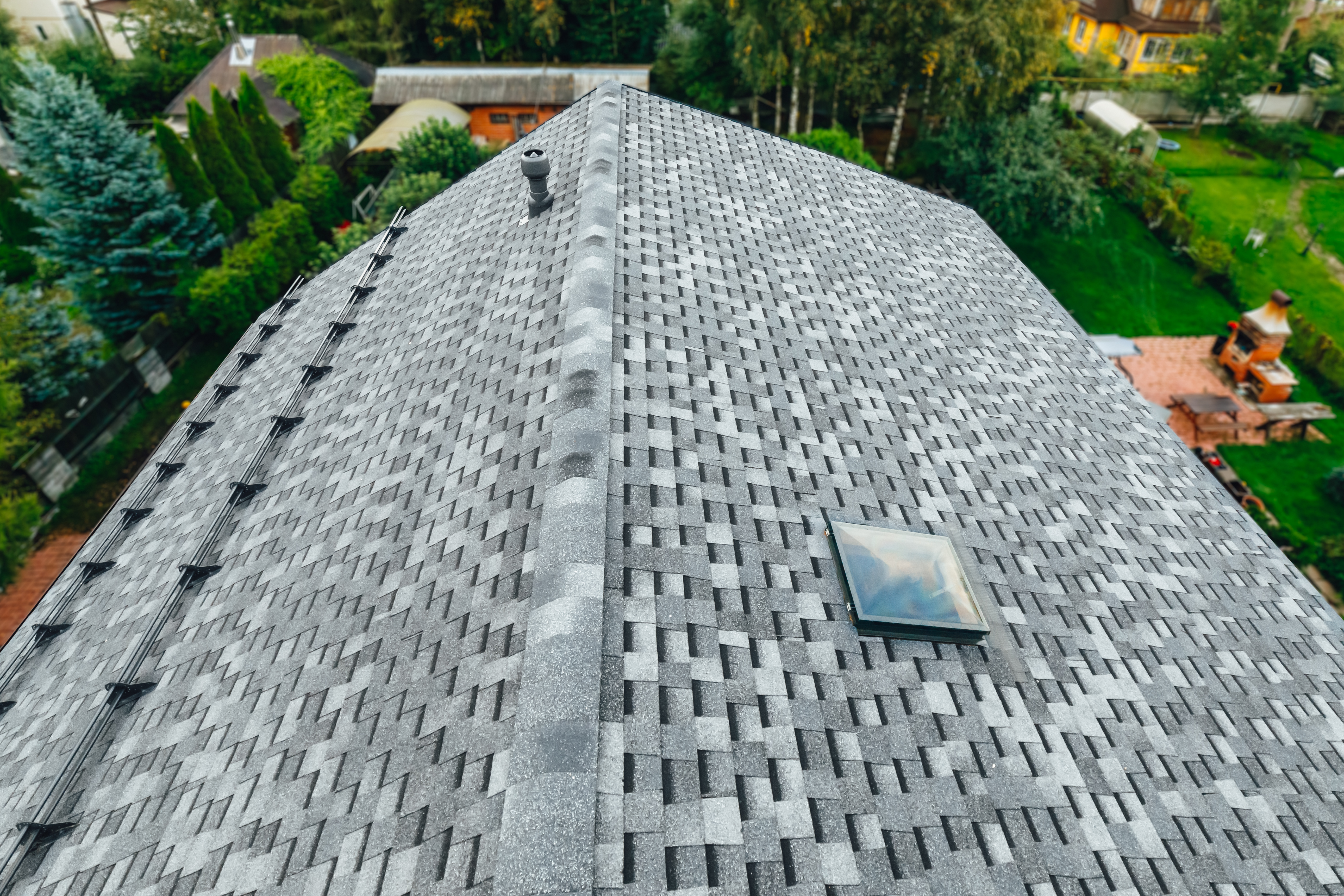
- Ridge vents: Run the full length of the roof peak and provide continuous, uniform exhaust across every rafter bay. The most efficient passive exhaust option for most pitched roofs. Nearly invisible from street level.
- Box vents (static vents): Individual units cut into the roof deck near the ridge. Used in multiples on roofs that can’t accommodate a continuous ridge vent, like complex hip roofs or dormered colonials.
- Soffit vents: The standard intake solution, installed in the underside of the eave overhang. Available as continuous perforated strips or individual units. Essential for any ridge vent system to function correctly.
- Gable vents: Louvered vents on the triangular end walls of the home. Work as supplemental ventilation but can actually short-circuit a ridge-and-soffit system by redirecting airflow. Use carefully.
- Turbine vents: Wind-powered spinning vents that create suction to draw out attic air. Affordable and mechanical (no electricity). Less reliable in low-wind conditions than ridge vents.
- Power attic ventilators: Electrically or solar-powered fans that actively exhaust attic air. Effective for extreme heat situations, but require adequate intake or they’ll pull conditioned air from your living space.
For most pitched roofs in the Philadelphia metro area and South Jersey, the most effective setup is a continuous ridge vent paired with continuous soffit vents. It’s a passive system that uses natural convection, costs nothing to operate, and performs consistently year-round. Learn more about our roofing services.
Do Roofs Actually Need Vents?
Yes, for almost every home in this market. Philadelphia is in Climate Zone 4A: hot, humid summers and cold winters with hard freeze-thaw cycles. Both extremes punish an unventilated attic in different ways.
- Summer: Attic temperatures in an unventilated space can hit 150 degrees or higher. That heat bakes your shingles from below, accelerating granule loss and shortening the lifespan of your roof. Asphalt shingles are especially vulnerable.
- Winter: Warm air from your living space rises into the attic, hits the cold roof deck, and condenses. That moisture warps sheathing, grows mold, and creates the uneven roof temperatures that cause ice dams along the eaves.
- Year-round: Without airflow, moisture accumulates. The damage to framing and insulation often goes undetected until a roof replacement uncovers what’s been happening for years.
The exception is a hot roof system, where the entire roof assembly is fully insulated and air-sealed with no attic space. That’s a specific engineered design. For the vast majority of homes in the Philadelphia area, building code requires ventilation and for good reason.
If you’ve had storm damage recently, ventilation problems can compound the underlying damage fast. It’s worth getting an assessment sooner rather than waiting for the next repair cycle.
What Does Fixing a Roof Ventilation Problem Cost?
It depends on what’s actually wrong, but here’s a realistic range.
- Clearing or replacing blocked soffit vents: typically a low-cost fix, often under $500. This is the most common problem and the most underpriced repair in roofing.
- Adding continuous ridge vents to an existing roof: $300 to $600 for most homes, depending on ridge length and whether it’s done as a standalone job or during a re-roof.
- Installing a power attic ventilator: $300 to $800 installed, more for solar-powered units.
- Full ventilation correction during a roof replacement: typically added to the project cost at $500 to $1,500 depending on the scope of intake and exhaust work needed.
The expensive version of this problem is ignoring it. A roof that fails 10 years early because of chronic overheating or moisture damage costs far more than the ventilation fix that would have prevented it.
Warning Signs Your Roof Isn’t Ventilating Properly
You don’t need to get on the roof to spot most of these. Start from the ground and the attic hatch.
- The attic feels significantly hotter than the outside air temperature on a summer day
- Frost or condensation on the underside of the roof deck in winter
- Shingles that are blistering, curling, or aging unevenly across different roof slopes
- Ice dams forming along the eaves after snowfall
- Musty or mildewy odors when you open the attic hatch
- Soffit vents that are painted over, visibly clogged, or where you can’t see daylight through from inside the attic
If two or more of those apply to your home, the ventilation system isn’t doing its job. The good news: this is usually a fixable problem, and it’s almost always cheaper to address before the next roofing project than after.
Questions Homeowners Ask About Roof Ventilation
What is a roof vent, exactly?
A roof vent is any device or opening that allows air to move into or out of the attic space. The term covers ridge vents, box vents, soffit vents, gable vents, turbine vents, and power ventilators. They work together as a system: intake vents bring cool air in at the low end; exhaust vents push hot air out at the high end.
Can I have too many roof vents?
Yes, if the vents are imbalanced. More exhaust than intake forces the system to pull conditioned air from your living space rather than outside air from the soffits. The result is higher energy bills and an attic that still overheats. More intake than exhaust is generally fine; the inverse is the problem.
Do I need to replace my roof to fix the ventilation?
Not always. If the issue is blocked or inadequate soffit vents, that can often be addressed independently. Ridge vents can be added to an existing roof in many cases. A full ventilation correction is most cost-effective when done alongside a re-roof, but it’s not always required to do both at once.
If you’re not sure whether your roof is ventilating properly, Porter Family Exteriors has been serving homeowners across the Philadelphia metro area and South Jersey since 1976. Contact us to schedule a roofing assessment. We’ll tell you exactly what we find.