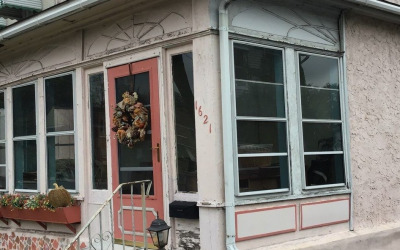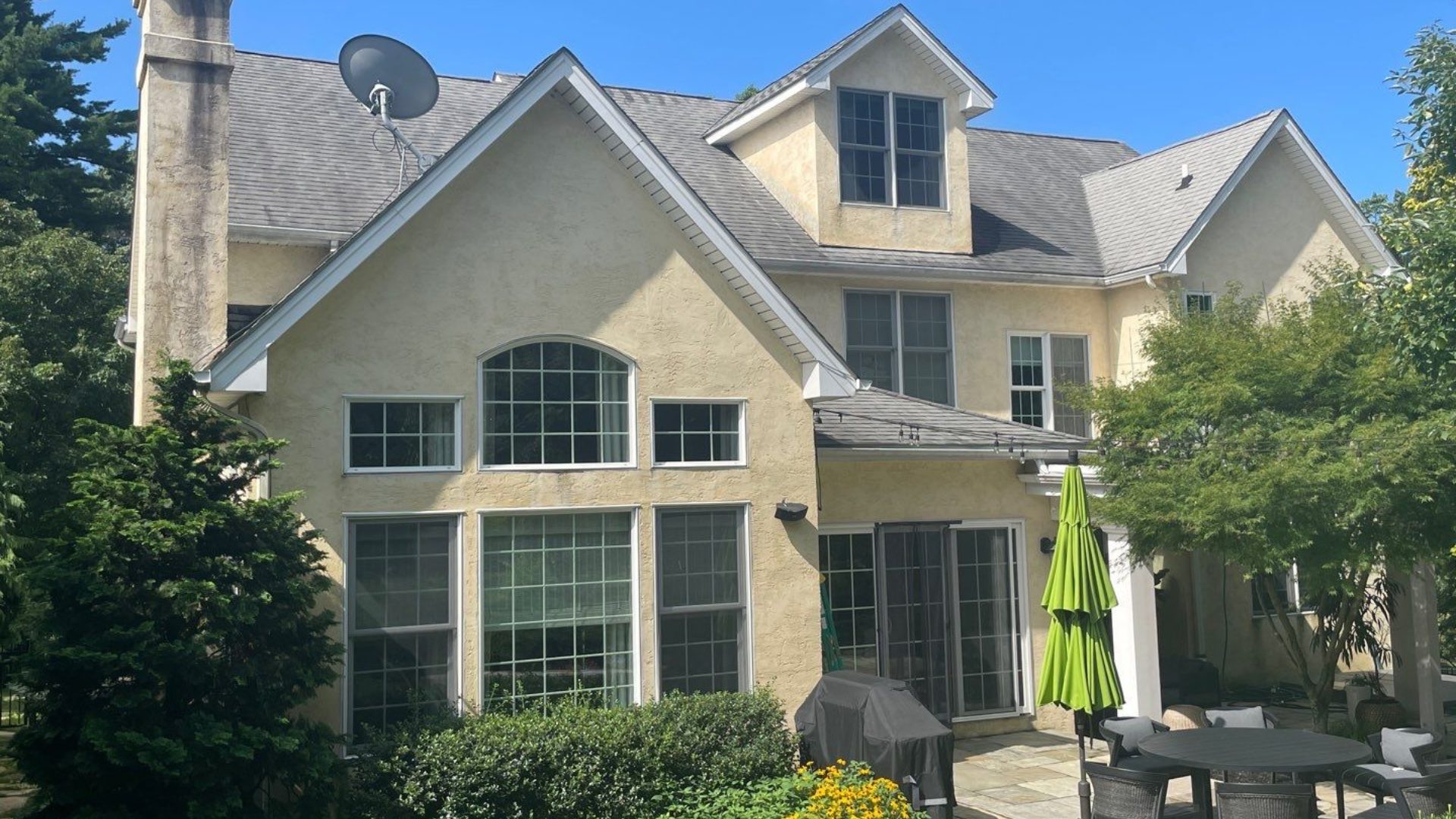
Here’s the uncomfortable truth about stucco water damage: by the time you can see it, it has usually been rotting your walls for years. Poorly installed stucco lets water in at windows, rooflines, and the base of the wall, then traps it against your home’s wood sheathing and framing. The surface can look perfectly fine while the structure behind it softens, molds, and fails.
If your home was built between 1985 and 2010 and has stucco, read this before winter.
This is one of the most common exterior problems across Delaware, Chester, Montgomery, and Bucks counties in Pennsylvania, New Castle County in Northern Delaware, along with Camden, Burlington, and Gloucester counties in South Jersey. Thousands of Mid-Atlantic homes were clad in stucco from the late 1980s through the 2000s, and many were installed without the technical details that allow water to drain out. Here is what poor installation hides, how to spot it, and what fixing it actually involves.
The Short Answer: What You Need to Know
- The root cause: Stucco is porous. Without a functioning drainage plane, proper window flashing, and an unburied weep screed, trapped water rots sheathing and framing out of sight.
- The warning signs: Cracks at window corners, dark streaks, soft spots, swollen trim, or a musty smell indoors.
- The fix: Patching over wet sheathing seals moisture inside. Lasting stucco remediation means removing the failed stucco, repairing the underlying wood framing, installing a proper drainage plane, and re-cladding the home.
The Problem Was Never the Stucco
Stucco is a good cladding for this climate. Installed correctly, it lasts for decades. What failed across the Philadelphia region was the way it was installed during the building boom from the late 1980s through the 2010s, when houses went up fast and cheap and codes hadn’t caught up.
A properly built stucco wall is a system, not a coating:
- A drainage plane. Synthetic house wrap made for stucco and stone, or two layers of Grade D building paper (what the International Residential Code Chapter 7 requires), with every window, door, hose bib, and vent flashed before anything else goes on.
- Flashings that move water out. Drip caps, kick-out diverters, flashing tapes, caulk joints at dissimilar metals, and expansion joints where walls move. Caulk is a backup, never the primary defense.
- A rainscreen. A drainable layer behind the stucco that gives water a path down and out, integrated with the weep screed at the base.
- Lath and a true three-coat finish. Wire mesh, two brown coats, and a finish coat, at a code minimum of 7/8 inch thick.
Boom-era homes routinely skipped most of this. We open walls and find no kick-outs, no drip caps, no expansion joints, caulk doing the job of flashing, and stucco under half an inch thick. Today’s codes require the full system, which is also why stucco done right is now one of the most expensive claddings you can put on a house. Synthetic stucco (EIFS) from the same era is worse: most of it was a barrier system with no drainage at all, so one failed joint sends water straight into the wall.
5 Installation Mistakes That Cause Stucco Water Intrusion
Most stucco water intrusion traces back to a handful of details that were skipped or done wrong during construction:
- Missing or poor window and door flashing. Windows are the most common entry point. Without properly lapped flashing and sill pans, water that gets behind the stucco at a window corner runs straight into the framing below. That’s why damage often shows up as cracks or stains running down from the lower corners of windows.
- No kick-out flashing where a roof meets a wall. A kick-out flashing is an angled piece of metal at the bottom edge of a roof that runs into a sidewall. It steers roof runoff away from the wall. Without it, every rainstorm sends water directly behind the stucco.
- No drainage plane or rainscreen. Without a drainable barrier or double-layer house wrap, water that penetrates the stucco has no path out and sits directly against the wood sheathing.
- Missing or buried weep screed. A weep screed is the metal or plastic strip at the base of the wall that lets trapped water drain out. Code requires it at least 4 inches above soil and 2 inches above paved surfaces. When it’s missing, or the stucco runs straight into mulch, a patio, or a driveway, water collects at the bottom of the wall and soaks into the framing.
- Thin stucco and no expansion joints. Coats under half an inch thick crack early under thermal stress. Without expansion joints where walls move, every seasonal freeze-thaw cycle opens new pathways for water intrusion.
What Water-Damaged Stucco Hides Behind Your Walls
Once water gets past the stucco, it does its damage out of sight. Here’s what crews commonly find when failed stucco comes off:
- Rotted sheathing. The plywood or OSB behind the stucco softens and, in advanced cases, crumbles by hand.
- Damaged framing. Studs and sill plates at window corners and the base of walls can rot, which affects the wall’s structural strength.
- Mold. The U.S. EPA advises drying wet materials within 24 to 48 hours to prevent mold. A wall cavity behind failed stucco can stay wet for months.
- Insect activity. Damp, softened wood attracts carpenter ants and termites.
- Interior damage. Stained drywall, swollen baseboards, peeling paint, and a musty smell in rooms along exterior walls.
Already have an inspection report, or think your home has damage?
Schedule a free estimate with our team today at (610) 870-4302 or request a consultation online.
Warning Signs of Stucco Damage You Can Check Today
Most stucco damage is invisible from the outside, but these signs suggest water is already getting in:
- Cracks spreading diagonally from the corners of windows and doors.
- Dark streaks or staining below windows, roof edges, and decks.
- Bulging, soft, or hollow-sounding areas when you press on the wall.
- Stucco touching the ground, mulch, or roof shingles.
- Rotted window sills or water stains on interior walls.
A clean-looking wall doesn’t mean a dry one. The only reliable answer is moisture probe testing performed by an independent third-party stucco inspection company. An inspector drills tiny holes behind suspected areas, takes readings from the sheathing, and seals the holes afterward. Porter Family Exteriors does not perform probe testing; we provide free estimates and build our remediation scope directly from your independent inspection report.
How Stucco Water Damage Is Fixed
Patching cracks or rolling an elastomeric coating over the surface is a temporary repair. It fixes the look, not the water. If moisture is already behind the wall, a patch can actually seal it in.
The permanent fix is stucco remediation: removing the failed stucco, replacing rotted sheathing and framing, installing a proper water-resistive barrier and flashing system, and re-cladding the home. Full remediation on a Philadelphia-area home typically runs $45,000 to $200,000 depending on home size, the extent of the damage, and how many windows need reflashing. Plan on 4 to 6 weeks for a standard project and 6 to 8 weeks for a larger scope. The drivers are how many windows need reflashing, how much sheathing and framing is damaged, and whether the project adds stone, a portico, or other features versus straight stucco off and siding on.
- Windows are part of the job. Most of the damage behind stucco starts at window openings that were never flashed. Once the stucco is off, we inspect every window to see whether it was flashed correctly. Windows that were are left in place. Windows that weren’t are removed, fitted with a proper sill pan and flashing system tied into the new drainage plane, and reinstalled with exterior trim. Homeowners who want new windows do it then, since the openings are already exposed. For those who don’t, reinstalling the existing windows with trim means new units can go in later by removing the trim, without disturbing the new cladding or house wrap.
- Why we re-clad in James Hardie. Rebuilding in stucco the right way, with the full drainage system behind it, puts the project out of reach for most homeowners. We partnered with James Hardie years ago because fiber cement gives these homes a look and lifespan that beats vinyl, with a correctly built wall behind it, at a price that makes remediation possible.
Explore options on our James Hardie Siding Page, review payment options on our Financing Page, or see current siding price ranges on our Pennsylvania Siding Cost Calculator and New Jersey Siding Cost Calculator.
Picturing how a modern fiber cement transformation will look on your home after stucco removal? Use our free 3D Design Preview Tool to test James Hardie lap siding, board and batten, and stone accents on an interactive 3D model of your house.
Why Homeowners Choose James Hardie® Fiber Cement
As a James Hardie Elite Contractor with a 5-star Google rating across all three of our locations, Porter Family Exteriors installs strictly to manufacturer specifications so your new wall is done right the first time. We are also the only company in the Northeast to win both the James Hardie President’s Club and the James Hardie Service Excellence Award, two years running. Our certified installation protects both your 30-year non-prorated product warranty and your 15-year ColorPlus® finish warranty.
Frequently Asked Questions About Stucco Water Damage
How do I know if my stucco has water damage?
Visible cracks, stains, and soft spots are clues, but they don’t confirm it. Moisture probe testing conducted by an independent third-party stucco inspector is the only way to measure what’s happening in the sheathing behind the stucco. If you’re buying or selling a stucco home built between 1985 and 2010, test before closing.
Who does stucco moisture testing, and what does it cost?
Independent stucco inspection companies perform testing and set their own fees. Porter Family Exteriors does not test stucco; we provide free estimates and build the remediation scope from your independent inspection report.
The buyer’s stucco inspection found high moisture. What are my options?
Get your own test from an independent inspector to verify the findings. Understand that buyers and lenders will require remediation or an equivalent financial credit to close. A written, itemized remediation scope from a qualified contractor is what keeps the deal alive and moving toward settlement.
Is a water damage stucco repair enough, or do I need remediation?
It comes down to how far the water has spread. If high readings are limited to one small area and the framing is sound, a targeted repair with corrected flashing can work. If readings are elevated across multiple walls, or the sheathing is already soft, a patch won’t stop it and full remediation is the right call.
Does homeowners insurance cover stucco water damage?
Usually not. Most standard policies exclude damage caused by poor workmanship, construction defects, or long-term leaks, which describes most stucco failures. Check your policy and talk to your agent before assuming coverage either way.
Is all stucco bad?
No. Properly installed traditional stucco with integrated flashing, a dual-layer water-resistive barrier, a rainscreen drainage plane, and an unburied weep screed can last for decades. The problem is almost always the installation during the building boom, not the material itself.
Get Ahead of Stucco Water Damage Before Another Winter
Stucco water damage doesn’t fix itself, and it doesn’t stay the same size. Porter Family Exteriors has been repairing and rebuilding home exteriors across southeastern Pennsylvania, South Jersey, and Northern Delaware since 1976.
Schedule your free estimate with our team today by calling (610) 870-4302 or submitting a contact request online. We serve homeowners in Delaware, Chester, Montgomery, and Bucks counties in PA, New Castle County in DE, and Camden, Burlington, and Gloucester counties in NJ from our offices in Media, Willow Grove, and Cherry Hill.
About the Author
Justin Porter
CEO, Porter Family Exteriors
Justin Porter is CEO of Porter Family Exteriors, the second-generation exterior remodeling company his father, Roy Porter, founded in 1976 and that Justin now runs with Roy and his three brothers from offices in Media, Willow Grove, and Cherry Hill. In his 20-plus years in the business, Justin has helped make PFE the only contractor in the Northeast to hold both the James Hardie President’s Club, for the highest Hardie install volume in the region, and the James Hardie Service Excellence Award, for the highest customer satisfaction, two years running, alongside GAF Master Elite President’s Club and Andersen Certified Elite Contractor status and a 5-star Google rating across all three locations. He writes about James Hardie siding, stucco remediation, roofing, and window replacement for homeowners across Pennsylvania, New Jersey, and Northern Delaware.