Here’s what most roofing conversations skip: the vent. It’s a $300 to $650 part – and if it’s wrong, it can void the warranty on a $15,000 roof. In older Philadelphia-area homes especially, poor attic ventilation is one of the most common and costly oversights in roofing. This post explains what roof vent installation actually costs, what drives that cost, and why getting this right before your next roof goes on is worth the conversation.
How Much Does Roof Vent Installation Cost?
Roof vent installation cost typically ranges from $300 to $650 per vent installed. A full-house ventilation upgrade – replacing or adding multiple vents to balance intake and exhaust – often runs $1,500 to $4,500 depending on your home’s size, attic configuration, and vent type.
What Drives the Cost of Roof Ventilation?
- Vent type: Ridge vents run lower per linear foot but require professional installation. Soffit vents (intake) are among the least expensive per unit. Box vents and gable vents are mid-range. Power vents (attic fans) are the most expensive, often $250–$600 per unit installed.
- Number of vents needed: Most homes require one square foot of net free ventilation per 150 square feet of attic floor space. That’s the industry standard ratio. If your attic falls short, several new vents may be needed in a single project.
- Accessibility: Steep pitches, complex rooflines, and finished attic spaces add labor time and cost.
- Existing vent condition: Blocked, damaged, or incompatible vents require removal and replacement, adding to the total.
- Coordination with roof replacement: Ventilation addressed during a re-roof typically costs less than a standalone project. If you’re already replacing the roof, it’s the right time to get this right.
What Is a Roof Vent and How Does it Work?
Roof ventilation moves heat and moisture out of your attic through a balanced system of intake and exhaust. Intake vents (typically soffit vents along the eaves) draw in fresh air from below. Exhaust vents – ridge vents, box vents, or gable vents near the peak – push warm, moist air out. When both sides are balanced, your attic stays stable and the roof deck is protected from below. It’s a common mistake to assume more vents automatically means better airflow. Without the right balance, the system can still underperform.
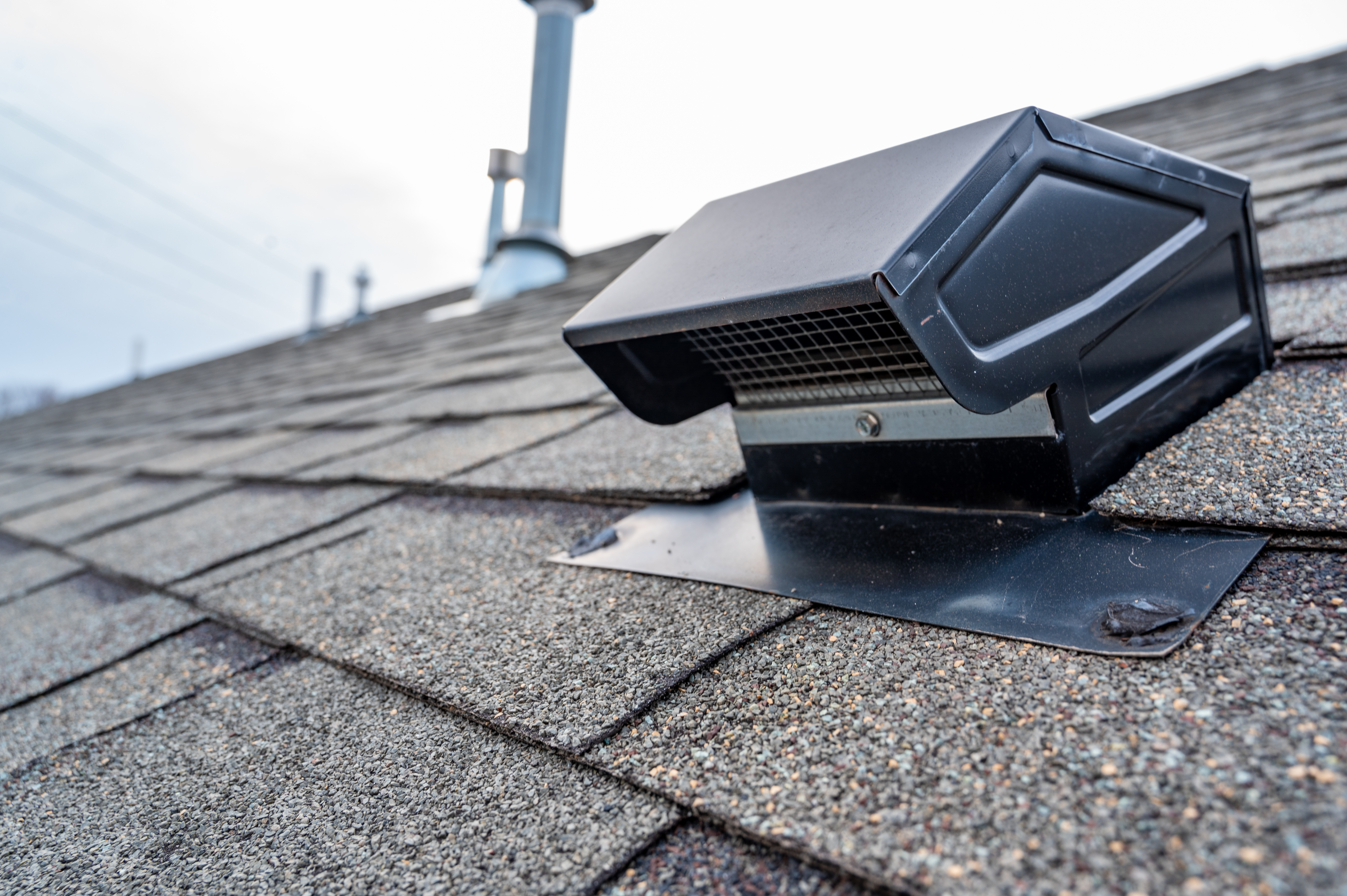
Common roof vent types include soffit vents (intake), ridge vents (exhaust), box/static vents (exhaust), gable vents, and power vents (attic fans). Each has a different cost profile and works best when matched to your home’s specific attic design – which is why ventilation should always be reviewed as part of a full evaluation by roof replacement specialists, not treated as an afterthought.
Signs Your Roof Ventilation May Be a Problem
| Sign | What it May Suggest |
| Hot upper-floor rooms | Excess attic heat |
| Musty attic smell | Trapped moisture |
| Damp sheathing or condensation | Poor moisture movement |
| Uneven roof aging | Ongoing system stress |
| Repeated issues after severe weather | Existing roof vulnerability |
These signs are worth taking seriously. In the Philadelphia area, where freeze-thaw cycles put extra stress on roofing systems every winter, poor ventilation accelerates the damage. After a storm especially, hidden weaknesses can surface alongside other damage. Homeowners dealing with weather-related exterior issues should consider storm damage repair for roof, gutters, and siding as a connected evaluation rather than separate repairs.
Roof Ventilation and Warranties: Frequently Asked Questions
Can poor roof ventilation void my shingle warranty?
Yes, in many cases it can. Most major shingle manufacturers require adequate ventilation as a condition of warranty coverage. If ventilation is found to be inadequate at the time of a claim, the manufacturer may deny it. A vent or two never properly installed or reviewed can put a $15,000+ roofing investment at risk.
What ventilation do warranties typically require?
Most manufacturers follow the standard of 1 sq. ft. of net free ventilation per 150 sq. ft. of attic floor space, with balanced intake and exhaust. For homeowners with asphalt shingle roofs, this is not optional; it is a condition of coverage written into most manufacturer warranties.
Does my roofer have to check ventilation when replacing my roof?
A reputable roofer should evaluate your existing ventilation system before any roof replacement. Skipping this step is one of the most common reasons a new roof underperforms or a warranty claim runs into trouble. If ventilation wasn’t part of your estimate conversation, ask before work begins.
When should I get a roof ventilation inspection?
Any time you’re planning a roof replacement, recovering from storm damage, or noticing heat or moisture signs in your attic. Catching ventilation problems before a new roof goes on is almost always cheaper than dealing with the consequences after.
Why This “Small Part” Deserves Bigger Attention
Roof ventilation affects too much to treat casually. When your roof is aging, when storm damage has occurred, or when attic symptoms appear, ventilation needs to be part of the evaluation. The danger isn’t the vent itself. It’s underestimating how much that one overlooked detail can affect everything above it.Porter Family Exteriors has been serving homeowners across the Philadelphia metro area and South Jersey since 1976 – including our offices in Media, Willow Grove, and Cherry Hill. If you’re planning a roof replacement or want to know where your current ventilation stands, reach out to our team for a detailed evaluation. We look at the full roofing system, not just the surface. Contact us to get started.